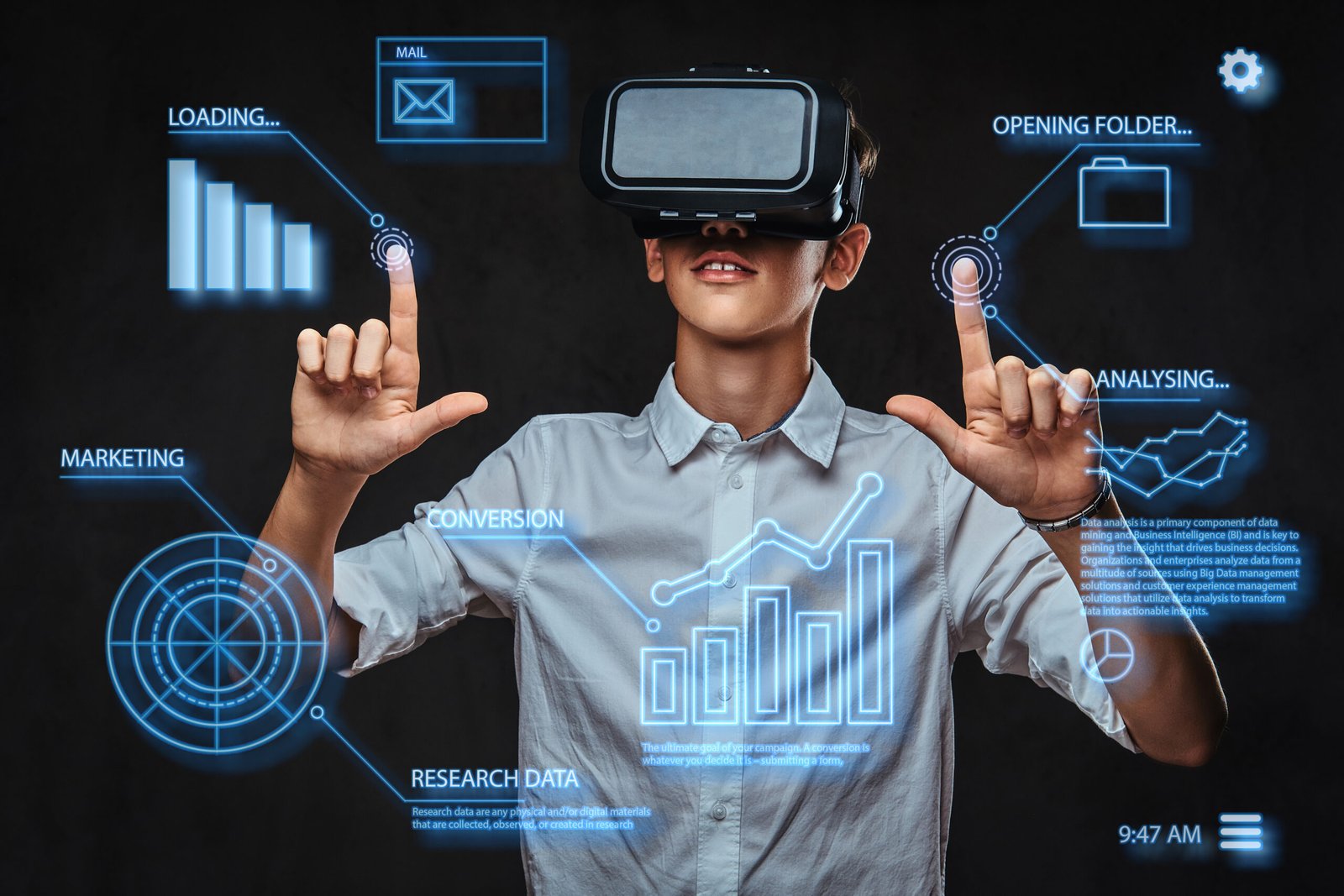
AI in Marketing is no longer a futuristic concept limited to technology conferences and science fiction movies. In 2026, AI in Marketing has become a core part of digital business strategies. Businesses across industries now use AI in Marketing to automate tasks, improve customer targeting, optimize campaigns, and create personalized customer experiences.
From AI-generated advertisements to smart product recommendations, AI in Marketing is transforming digital marketing faster than ever before. Companies that once relied on manual marketing methods are now using automation, predictive analytics, and machine learning tools to stay competitive in the digital marketplace.
What Is AI in Marketing?
AI in Marketing refers to the use of artificial intelligence technologies such as machine learning, predictive analytics, automation, and natural language processing to improve marketing performance. Businesses using AI in Marketing can analyze customer behavior, automate repetitive tasks, improve decision-making, and create highly personalized marketing campaigns.
Think of AI in Marketing as a smart digital assistant that continuously learns from customer data and improves marketing strategies over time. Instead of manually analyzing spreadsheets or testing ads one by one, marketers now use AI in Marketing tools to complete tasks faster and more efficiently.
Modern AI in Marketing tools can:
- Generate ad copy
- Suggest high-performing keywords
- Create social media captions
- Predict customer behavior
- Automate email campaigns
- Improve SEO strategies
- Analyze campaign performance
This makes AI in Marketing one of the most valuable technologies for businesses in 2026.
Businesses are rapidly adopting AI in Marketing because customers now expect fast responses and personalized experiences. Generic advertising no longer works effectively. Consumers want businesses to understand their interests, shopping behavior, and preferences. AI in Marketing helps brands deliver these personalized experiences by analyzing large amounts of customer data in seconds.
Popular digital platforms also rely heavily on AI in Marketing technologies. Platforms like Google, Meta, and YouTube use AI-powered algorithms to personalize advertisements, improve recommendations, and optimize user engagement.
The growth of generative AI tools has made AI in Marketing even more powerful. Businesses now use AI for content creation, chatbot automation, customer support, analytics, and audience targeting. Companies investing in AI in Marketing are improving efficiency while reducing manual workload.
Recent reports show that most marketers now use generative AI in at least one part of their workflow. This proves that AI in Marketing has moved from experimental technology to mainstream business practice. Businesses that ignore AI in Marketing risk falling behind competitors already using AI-powered strategies for customer engagement and online growth.
In 2026, AI in Marketing is helping businesses achieve faster growth, smarter automation, improved personalization, and better digital marketing performance across multiple platforms.
Why Businesses Are Rapidly Adopting AI
Businesses are adopting AI because traditional marketing methods are becoming slower and less effective in a fast-moving digital world. Modern consumers interact with brands across multiple platforms, including search engines, social media apps, emails, websites, and chat systems. Managing all these channels manually is exhausting and inefficient.
AI simplifies this complexity. It helps businesses understand customer journeys more accurately by collecting and analyzing data from different touchpoints. AI tools can identify patterns that humans might miss, like predicting when a customer is likely to leave a website or determining which product recommendations generate the highest conversions.
Another major reason behind AI adoption is cost efficiency. Marketing automation tools reduce manual workloads, helping businesses save time and money. According to recent reports, marketing automation programs deliver an average return of $5.44 for every $1 invested. (Digital Applied) That is a powerful incentive for companies trying to maximize profits while reducing operational costs.
In India, AI adoption in digital marketing is also growing rapidly. Research indicates that 78% of Indian SMBs now use AI for content creation, and businesses using AI-driven campaigns report significantly higher ROI compared to traditional campaigns. (Cloud 9 Digital) The growth is especially visible in e-commerce, education, fintech, and local service industries where customer targeting and automation play a critical role.
AI and Content Creation
AI Writing Tools and Content Automation
Content marketing used to require large teams of writers, editors, researchers, and SEO specialists. AI has changed that equation completely. Modern AI writing tools can generate blog posts, social media captions, email sequences, product descriptions, and ad copy within minutes. While human editing is still important, AI significantly speeds up the creative process.
This transformation is particularly important for businesses that need to publish content regularly. Search engines reward websites that consistently produce high-quality and relevant content. AI helps marketers maintain this consistency without burning out their teams. It can suggest headlines, optimize readability, identify keyword opportunities, and even recommend content structures based on search intent.
AI content tools also help marketers analyze competitor strategies. Instead of manually studying dozens of websites, AI systems can scan content trends and identify gaps in the market. That means businesses can create more targeted and valuable content for their audiences.
According to marketing research reports, 68% of marketers now use AI for content creation, making it one of the most common AI applications in digital marketing today. (AdAI News) The interesting part is that AI does not necessarily replace human creativity. Instead, it acts like a creative partner that handles repetitive work while humans focus on storytelling, strategy, and emotional connection.
AI for Video, Graphics, and Creative Content
AI is not limited to text-based content. It is also revolutionizing video production, graphic design, and multimedia marketing. AI-powered tools can automatically generate subtitles, edit videos, remove backgrounds from images, and create personalized visual content for different audiences.
Short-form video platforms like Instagram Reels, YouTube Shorts, and TikTok have increased the demand for fast content production. Businesses cannot afford to spend weeks editing a single promotional video anymore. AI tools help marketers produce content at scale while maintaining consistency across platforms.
AI-generated visuals are becoming more advanced as well. Brands now use AI to create product mockups, ad creatives, and personalized website banners. Imagine visiting an e-commerce website where the homepage changes dynamically based on your preferences. That is AI-powered personalization in action.
Creative industries were initially worried that AI would replace designers and video editors. In reality, most companies are using AI as a productivity tool rather than a replacement. Human creativity still matters because emotional storytelling, branding, and originality require human insight. AI simply helps marketers work faster and smarter.
Artificial Intelligence SEO
How AI Is Transforming Keyword Research
Artificial Intelligence SEO has completely changed the way marketers approach keyword research. Traditional SEO involved manually searching for keywords, checking search volume, analyzing competition, and building strategies around limited data. AI tools now perform these tasks within seconds while offering much deeper insights.
Modern AI-powered SEO platforms can identify user intent behind search queries. This is incredibly important because search engines like Google are focusing more on context rather than exact keyword matches. AI helps marketers understand what users actually want instead of simply targeting high-volume keywords.
For example, someone searching “best smartphone for gaming” has a completely different intent than someone searching “cheap smartphone repair near me.” AI tools analyze these differences and help businesses create content tailored to specific user needs.
Another major advantage is predictive keyword analysis. AI systems can identify trending search terms before they become highly competitive. This gives businesses an opportunity to rank earlier and attract organic traffic faster. Research shows that AI visibility monitoring and AI-focused SEO strategies are becoming some of the highest ROI marketing activities. (Presenc AI)
AI-Powered Search Engine Optimization Strategies
Voice Search Optimization
Voice search is changing how people interact with search engines. Instead of typing short phrases, users now ask complete questions through devices like smartphones and smart speakers. AI helps marketers optimize content for these conversational search patterns.
Businesses are adapting their SEO strategies by focusing on natural language keywords and question-based queries. This is especially important because voice searches often include local intent, such as “best restaurant near me” or “digital marketing agency in Pune.”
AI tools help marketers identify these conversational trends and create content that matches real user behavior. Websites optimized for voice search are likely to gain an advantage as smart devices continue to grow in popularity.
Predictive SEO Analytics
Predictive analytics is one of the most exciting developments in SEO. AI systems can analyze historical search trends, competitor movements, and user behavior to predict future traffic patterns. It is like having a weather forecast for digital marketing.
Marketers can use predictive analytics to plan seasonal campaigns, identify emerging topics, and optimize content before competitors react. This proactive approach improves visibility and increases organic traffic over time.
AI also helps detect SEO issues faster. Instead of manually auditing websites, marketers can rely on AI-powered tools to identify broken links, technical errors, duplicate content, and performance bottlenecks automatically.
Marketing Automation and AI
Email Marketing Automation
Marketing Automation has transformed email marketing from a manual process into a highly intelligent communication system. AI tools now analyze user behavior, browsing history, and engagement patterns to send personalized emails at the perfect time.
Think about how online stores remind you about abandoned carts or recommend products based on previous purchases. That is AI-driven automation working behind the scenes. These personalized campaigns generate much higher conversion rates compared to generic mass emails.
AI also improves subject line optimization, email scheduling, and audience segmentation. Instead of guessing what works, marketers can rely on data-driven insights. Reports show that AI-personalized emails achieve significantly higher click-through rates than traditional campaigns. (AI Cloudbase)
The beauty of automation lies in scalability. A small business can now run sophisticated email campaigns without hiring a massive marketing team. AI handles repetitive tasks while marketers focus on strategy and customer relationships.
AI Chatbots and Customer Support
Customer support used to involve long wait times, overloaded agents, and frustrated customers. AI chatbots have changed that experience dramatically. Businesses now use intelligent chat systems to provide instant responses 24/7.
Modern chatbots are much smarter than the robotic systems people remember from years ago. They can answer complex questions, recommend products, process orders, and even escalate issues to human agents when necessary.
This improves customer satisfaction while reducing operational costs. AI chatbots are especially valuable for e-commerce businesses where customers expect immediate assistance during the buying process.
Another advantage is data collection. Every chatbot interaction provides valuable customer insights that marketers can use to improve products, services, and campaigns. AI essentially turns customer conversations into actionable marketing intelligence.
AI in Social Media Marketing
AI-Based Audience Targeting
Social media platforms generate enormous amounts of user data every second. AI helps marketers make sense of this information by identifying audience patterns, interests, and behaviors.
Instead of targeting broad demographics, businesses can now create hyper-specific audience segments. For example, a fitness brand can target users interested in home workouts, healthy recipes, and wearable fitness technology simultaneously.
This level of precision improves ad performance and reduces wasted marketing budgets. AI systems continuously learn from campaign results, meaning targeting becomes smarter over time.
Platforms like Facebook and Instagram already rely heavily on AI-driven algorithms to optimize ad delivery. Businesses that understand these systems gain a significant competitive advantage in digital advertising.
Automated Ad Campaign Optimization
Running ad campaigns manually can feel like trying to juggle while riding a bicycle. There are too many variables including budgets, audience targeting, bidding strategies, creative testing, and performance analysis.
AI simplifies this process by automatically optimizing campaigns in real time. If one advertisement performs better than another, AI systems can shift budgets instantly to maximize results.
Personalization Through Artificial Intelligence
Customer Behavior Analysis
One of AI’s biggest strengths is its ability to analyze customer behavior patterns. Every click, search, purchase, and interaction leaves behind valuable data. AI processes this information to understand what customers want before they even realize it themselves.
This predictive capability allows businesses to create personalized experiences that feel natural and relevant. Streaming platforms recommending movies, e-commerce websites suggesting products, and music apps creating playlists are all examples of AI-powered personalization.
Customers appreciate personalization because it saves time and improves convenience. Instead of searching endlessly for products or content, users receive recommendations tailored to their interests.
Personalized Product Recommendations
Personalized recommendations are incredibly powerful because they increase both customer satisfaction and sales. AI systems analyze browsing history, purchase behavior, and demographic information to suggest relevant products.
Amazon, Netflix, and Spotify have built massive success stories around recommendation engines. Smaller businesses are now adopting similar AI technologies to compete more effectively in crowded markets.
Research shows that personalization engines deliver strong ROI because consumers are more likely to engage with content that feels relevant to them. (Presenc AI)
The challenge, however, lies in balancing personalization with privacy concerns. Consumers want convenience, but they also want transparency about how their data is collected and used.
Benefits and Challenges of AI in Marketing
Advantages Businesses Are Experiencing
AI offers several benefits that explain its explosive growth in digital marketing. Businesses save time through automation, improve targeting accuracy, increase customer engagement, and gain deeper analytical insights.
Another huge advantage is scalability. Small businesses can now compete with larger companies by using affordable AI tools for SEO, advertising, and customer support. Tasks that once required entire departments can now be handled by lean teams using automation platforms.
AI also improves decision-making. Instead of relying on assumptions, marketers can use real-time data to optimize campaigns and predict trends.
Ethical Concerns and Limitations
Despite its advantages, AI also creates challenges. One major concern is data privacy. Consumers are becoming increasingly cautious about how companies collect and use personal information. Reports suggest that privacy is becoming a major competitive factor in the digital economy. (Vogue)
Another issue is content quality. AI-generated content can sometimes feel repetitive or generic if businesses rely too heavily on automation. Human creativity remains essential for authentic storytelling and emotional connection.
There is also growing concern about job displacement. While AI automates repetitive tasks, most experts believe it will reshape marketing roles rather than eliminate them entirely. Human strategy, creativity, and relationship-building still hold enormous value.
The Future of AI in Digital Marketing
AI and Predictive Marketing
The future of digital marketing will become increasingly predictive. AI systems will continue improving their ability to forecast customer behavior, identify trends, and automate complex marketing decisions.
Predictive marketing means businesses can anticipate customer needs before they arise. Imagine receiving a personalized discount exactly when you are considering a purchase. That level of timing and relevance will define future marketing strategies.
AI agents and automation systems are expected to become even more integrated into marketing workflows over the next few years. (arXiv)
Human Creativity vs AI Automation
A common fear surrounding AI is that it will replace marketers entirely. In reality, the future will likely involve collaboration between humans and AI systems.
AI excels at analyzing data, automating tasks, and identifying patterns. Humans excel at creativity, storytelling, emotional intelligence, and strategic thinking. The best marketing teams will combine both strengths rather than choosing one over the other.
Businesses that rely only on automation risk creating bland and repetitive campaigns. The brands that truly stand out will use AI as a tool while maintaining strong human creativity and authenticity.
Conclusion
AI in Marketing is reshaping digital marketing at every level in 2026. From AI-powered SEO and automated content creation to personalized advertising and smart customer support, AI in Marketing is helping businesses make marketing faster, smarter, and more efficient. Companies are rapidly adopting AI in Marketing because modern consumers now expect seamless and highly personalized digital experiences.
The growth of AI in Marketing and marketing automation is helping businesses improve ROI, reduce manual work, analyze customer behavior, and make data-driven decisions in real time. Businesses using AI in Marketing tools can optimize campaigns, improve audience targeting, and increase customer engagement more effectively than traditional marketing methods.
At the same time, AI in Marketing also brings challenges related to privacy, ethics, and content authenticity. As businesses rely more on AI in Marketing, maintaining customer trust and transparency becomes increasingly important.
The future of AI in Marketing will not depend only on artificial intelligence technology. Successful businesses will combine AI in Marketing tools with human creativity, emotional understanding, and strategic thinking. While AI in Marketing acts as the engine driving modern digital growth, human insight remains essential for building authentic customer relationships and meaningful brand experiences.
In 2026, businesses that successfully adopt AI in Marketing strategies will gain stronger customer engagement, better campaign performance, improved efficiency, and long-term digital marketing success.
FAQs
1. What is AI in digital marketing?
AI in digital marketing refers to the use of artificial intelligence technologies to automate tasks, analyze customer behavior, personalize content, and optimize marketing campaigns.
2. How does AI improve SEO?
AI improves SEO by analyzing search intent, identifying trending keywords, optimizing content, and predicting search engine trends through advanced analytics.